They may make technical investments, possibly into alternate sending domains, to try to “trick” ISPs into delivering their messaging into the inbox like they used to. Unfortunately, this is a battle they are likely to lose.
The second group is very aware of the danger of deliverability issues. They are terrified of getting blacklisted or labeled as spammers and take list hygiene seriously.
This approach, while better, often leads to marketers suppressing or removing large amounts of subscribers to protect their reputation. Over pruning a list can be very expensive as well since often perfectly good leads are thrown out.
Fortunately, there is a third and better way of managing an email program. The best marketers are using technology to maximize the value of every lead in their database.
Instead of blasting their emails out all at once, they are sending them over time, making them less likely to be rate-limited and caught in corporate spam filters. They are using machine learning to determine who they should email more and who they should email less to maximize revenue and reduce the risk of deliverability issues.
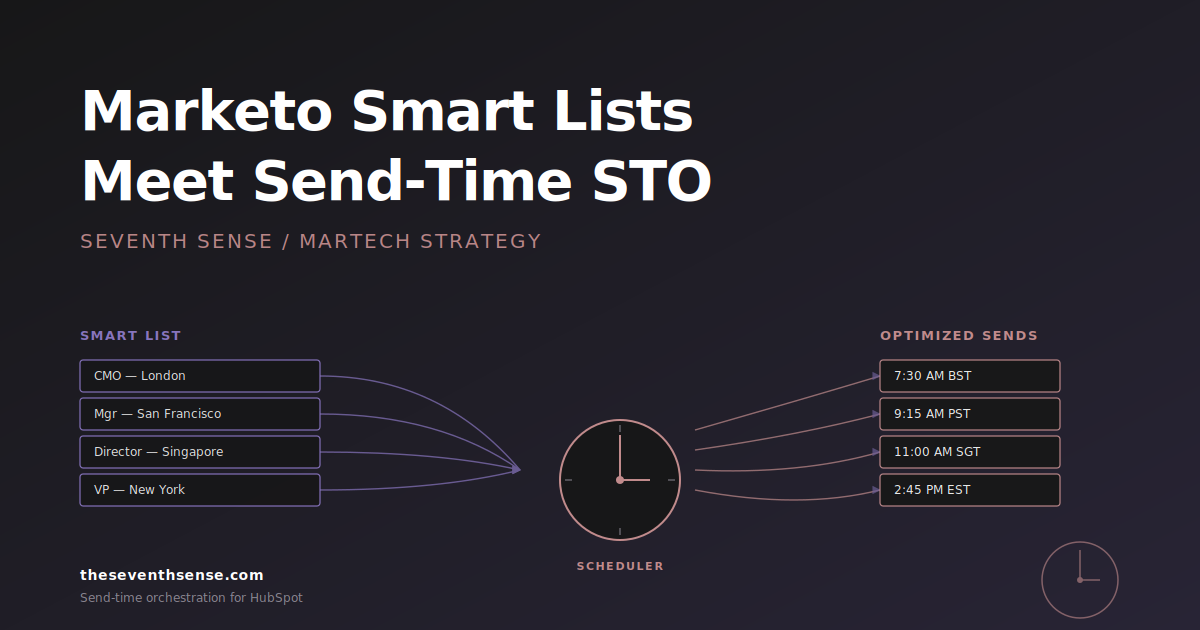
Rather than picking one “best” time to send an email, they are using AI to personalize the timing of each email they send. When other marketers are picking up the pieces from a costly email marketing mistake, they are adjusting their email campaigns to optimize results even as the campaign is still being sent.
Keep reading to find out how.
Improving deliverability in HubSpot - Two practical examples
What’s the basic formula for improving email sender reputation? Improve the ratio of negative engagement to positive engagement with your emails. That’s it.
The most obvious and dangerous negative interaction you can have is a spam complaint, but bounces and simply unopened emails will also drag down your reputation. Positive engagements include subscriber actions in the inbox like replying to, opening, clicking, or moving email from promotion/clutter/spam folders to the inbox.
The two most important things to understand here are that inbox providers are different and operate independently and that this is about ratios, not absolute values. This means that for some organizations, the solution will mean cutting back on the total emails sent, and for others, they may benefit from sending more emails.
Let’s take two scenarios. First, we’ll look at a high-volume sender, and second, we’ll look at a relatively low-volume sender who’s sending cold emails. We’ll call the first company Big Brand Blaster, and the second Start Up Seller.
Big Brand Blaster
Big Brand Blaster has an email list of over 5 million contacts. They send daily promo emails to their master list. They used to see email open rates in the 12-15% range, but recently, their open rates have dropped to single digits. In fact, their most recent email had just a 4% open rate.
Big Brand Blaster sees they are getting just a 2% open rate with Google inboxes, a 15% open rate with Yahoo/AOL/Verizon, and an 8% open rate with Microsoft. Clearly, they have a severe deliverability issue with Google and probably with Microsoft inboxes as well. They check Google Postmaster Tools and find that their reputation is “Poor.”
For big brand blaster, they already have a system in place that removes anyone who has not opened in the last 90 days, but even this has not been enough to protect them from a deliverability issue.
Why? Big Brand Blaster sends daily emails, which means that if someone stops opening, they will get NINETY emails before they are removed from Big Brand Blasters list. That is a lot of emails and a lot of negative (or at least neutral) signals going to Google.
Big Brand Blaster - Solution 1
The simple solution for Big Brand Blaster is to turn on HubSpot’s graymail suppression feature which will suppress all contacts who haven’t opened the last 11 emails they’ve received. By only sending to contacts that have opened in the last 11 days they will likely see their open rates jump very quickly.
This is a good short-term fix and they will probably start to see increased revenue as their emails start to inbox again. In the long term, however, they will likely see less revenue than they could have if they had created a more intelligent email strategy.
Big Brand Blaster - Solution 2
A better solution for Big Brand Blaster would be to build an engagement strategy that strikes the ideal balance between protecting deliverability and driving revenue for the business.
Many companies don’t understand that there is an ideal balance between deliverability and revenue. Suppress too many contacts, and you’ll protect deliverability but miss out on revenue. Suppress too few, and you’ll lose out on long-term revenue as more and more of your emails go to spam.
So what does this look like? While first, you’ll want to make sure your emails have the highest chance possible of being opened and clicked. To do this, they use Delivery Optimization for HubSpot to optimize the delivery times of emails for contacts who have open data and throttle emails to new contacts. Throttling email has been consistently shown to increase deliverability.
Second, Seventh Sense’s recycling capabilities helps them select exactly which contacts to email with each send to balance deliverability with new revenue. The optimizer uses machine learning to predict contacts by the likelihood of engaging with the next email they are sent.
If we only email highly engaged contacts, we’d see high open rates, but we’d likely not see as much revenue because many of the engaged contacts just enjoy our content but have already purchased what they need. If we email too many of the less/unengaged contacts, however, Big Brand blaster would start to see deliverability slip again.
Start-Up Seller
Start-Up Seller on the other hand sends 40-50 outbound prospecting emails to cold leads per day. In addition, they send a single monthly marketing email to contacts that didn’t respond to their initial prospecting email. Right now this list is just over 4400 contacts.
They used to see a 65% open rate across their 5 email sequences and had a 35% open rate on their newsletter. Now they are seeing a 34% open rate across their sequence and their marketing email is getting a 14% open rate.
Start-Up Seller using Seventh Sense finds they have a 25% open rate on their send to Google Workspace addresses but only a 5% open rate with Office 365. This indicates they have a deliverability issue with Microsoft, and possibly the start of one with Google as well.
Start-Up Seller - Story 1
Many businesses in this position feel trapped, so they do nothing. The easiest thing to do is just ignore the problem and continue to dump more leads into the top of the funnel. The problem is that cold outreach is particularly hard on email reputations. Just a few spam complaints can do tremendous damage when there is very little positive signal (opens/clicks) to counteract it.
Start-Up Seller - Story 2
A better solution for start-up seller is actually to send MORE emails, but send it to the right contacts. In this way, they can increase the ratio of positive to negative signals associated with their domain. To do this Start-Up Seller makes several changes.
Changing their email sequence so it drops contacts who don’t open after the first few emails. Contacts who haven’t opened after a few emails are likely not to open any future emails, so removing them will increase the ratio of opens/clicks to non-opens.
They add criteria to remove any contacts from their marketing list
The Real Solution - Seventh Sense
See what your email program could be doing.
Connect Seventh Sense to your HubSpot portal and watch the AI surface per-person engagement profiles, per-inbox-provider performance, and AI-driven optimization recommendations - within 24 hours.
Try it free →